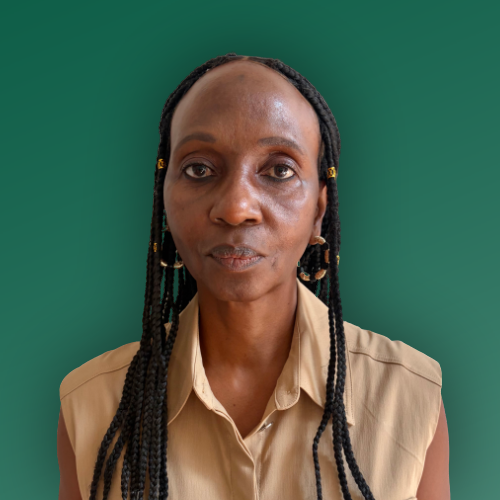
John H Godwin
she/herLicensed Clinical Social Worker (LCSW)

 Seniors & Geriatric, Self Esteem, Stress / Mental Stress / Work Stress, Social Anxiety, Suicidal Ideation, Step-Family / Blended Family Issues, Trauma / PTSD

Self pay costs
Out-of-pocket session costs for clients who don’t have insurance or aren’t covered by their insurance for mental health services.
I am John Godwin, a Licensed Clinical Social Worker in N.C. since 2001, passionate about working collaboratively with each client to foster positive change by helping them identify and achieve their unique goals. I work with clients to enhance self-esteem, navigate difficult life transitions, and cope with issues such as grief and loss, depression, and anxiety. I help clients develop and practice tools in therapy to prepare and empower them to live a fuller and more rewarding life, especially after therapy has ended.
I strive to offer a calm, compassionate space where clients can feel seen, supported, and encouraged to pursue meaningful change. Over the years, I have worked with diverse individuals by using approaches such as cognitive behavioral therapy, solution-focused strategies, and strength-based support to promote insight, resilience, and practical growth.
If you are struggling with issues that are currently making things difficult, you are to be commended for being here. Obviously, struggles in each area of your life affect the others. But just as it may feel like all aspects of your life are unraveling, they can begin to be put back together, piece by piece. Working together, things CAN get better.


"In 30+ years as a licensed clinical social worker, I’ve worked in a variety of settings, including a wilderness camp, hospitals, schools, behavioral health agencies, correctional facilities, and social service agencies. No matter what setting, my passion has been in working with clients individually and helping them move past whatever they feel might be keeping them from reaching their full potential."
Why did you decide to become a counselor or psychiatric provider?
I endured both physical and emotional trauma as a young adolescent and unfortunately had no one to talk to about the events I experienced ; in fact, in my family it was strongly encouraged not to talk about any "personal issues," i.e. negative feelings, or feelings in general, that might make others uncomfortable or upset. Likely due to this approach of being encourged to shut down one's own feelings, I became an adolescent who was extremely walled off from others emotionally. In fact, after the unexpected death of my father when I was 12, I would self-diagnose myself as an adolescent with major depression, oppositional defiant disorder, social anxiety, substance abuse disorder, and possible avoidant personality disorder. My world was marked by extremely self destructive behavior, a lack of motivation, and a lack of understanding that my immediate family structure was so incredibly dysfuntional -but this was the 1960s-70s, so we weren't the only ones. I was never overtly suicidal but I spent more time hoping that I would die that hoping to live, until fortunately that scale began to tip in the other direction when college became something that was actually interesting, and not just something to be endured in a drug-fueled haze. Somehow I was able to graduate from a good university within 5 years, and immediately go to work and establish feelings of self worth in a career that lasted 10 years. That's not to say that the self-destructive behavior and substance abuse immediately went away, but eventually another traumatic event occurred that enabled me to seek help and to work on the unresolved grief of my father's death, my family's dysfunction, etc. I left the career that I had been in after beginning to do volunteer work that I derived much more satisfaction from than the work that I was doing successfully in my career. Eventually, I changed careers and I landed at a wilderness camp that was just accepting its first residents, and I became one of its first residents - I mean counselors(!) although I felt I derived as much benefit from the therapeutic nature of the program as the residents. After a few years at the program, they graciously paid for my first year of graduate school pursuing my MSW degree and since then I've been working as a social worker. I think at times I feel that I'm the person my teenage self needed to talk to but didn't have available, and I feel immensely grateful to be that person for others, no matter what age they are or whatever their particular circumstances may be.
What types of clients do you work best with?
That is a difficult question. I'd like to say that I work well with everyone, and I certainly DO try to do my very best with everyone, to not be judgemental, and to alwayhes think in terms of what's best for the clients, including possibly referring that client on to someone who might better serve that person. But I've always heeded a piece of advice that's come in well when I find someone difficult to work with. As a young clinician I was obviously frustrated after dealing with someone with a personality disorder, and feelng that the client had "played" me by becoming argumentative with me and then seeing that the argument was frustrating to me. I went back to the office feeling ashamed and that the cliient had "won" in a way, and that part of the client's motivation was to feel superior. An older clinician talked to me about this and helped me process how I was feeling, and left me with words that Ive never forgotten. "When someone makes you feel this way, think about what that other person's life has been like that's made him or her have to interact with others they way they just did with you." So I always try to keep in the back of my mind that what others are displaying to us is probably just the tip of the iceberg. And in regard to different "types" of clients, I try not to think of them in terms of types, but rather initially to the best of my ability to get to know them as individuals. I know that can be hard especially when we have to do an intake and ask tons of diagnostic questions at the beginning, but then I like to say during the next session something like, sorry about having to ask so many questions about your history and all that last time and about your diagnoses and all that, so this time how about we focus on YOU? My previous career as a writer and editor has helped me when it comes to talking to clients I think. I may not be interviewing them per se to get the best subject matter, but I am searching for the material that's going to matter the most in our work together. In both writing and therapy - coincidentally, the top 2 jobs for my Myers-Briggs personality type, INFP, - I'm asking open ended questions, and always thinking about my conversations with others as kind of a verbal Rubiks cube were things are being twisted verbaly until something clicks with the client and the things that they really want to talk about matter. So I know a lot of clinicians may say they work best with clients who are willing to talk readily, I find it very challenging when someone has a wall built around them, and I'm looking for the ways to establish a relationship with that person and come to a point where slowly parts of the wall come down and the person begins to reveal themself.
What's one thing you wish all clients knew about therapy, mental health, or the healing process?
That while it can be extremely difficult, it is also extremely satisfying. And it can be joyful. It doesnt always have to be filled with sadness and the reliving of grief. There are ways of moving past the grief and reliving moments in one's life that are amazingly joyous and beautiful, but have often been taken away from the client because of their circumstances, including the actions of others. It can also be fun - I try to keep things light-hearted when appropriate particularly by using a lot of self deprecating humor. I think that by modeling that I can laugh at myself, it enables clients to see that we are human, too, and not so-called experts.
What can clients expect in their first session with you and in the early stages of therapy?
Clients can expect that I will be warm and inviting and friendly, and do everything i can do make them feel comfortable particularly if they're feeling uneasy. I'll give them an outline of what the expectations for today's session will be, and I'll frequently mention that if they have questions, to please ask me. I'll begin by asking what brought the client to Thriveworks and was it a difficult process. I'll ask what their experience is with therapy, or if they know others who have had experience with therapy, and focus in on why they've chosen to come to therapy at this particularly point. Of course we'll be doing intake / assessment material, but I'll try to interject what to expect from therapy, particularly if it's new to them, and also talk about the stages of therapy and what we will be doing in thiese initial sessions. I'll leave plenty of time for questions, hopefully, and also carefully review HIPAA confidentiality regulations and ask if they have questions about that. I'll also ask if there are particular questions that they have about me, and talk about boundaries about what I can and cannot revea about myself, but will also talk in a very broad sense about my experience with therapy and times when it has been most beneficial.
What personal experiences or values inform your practice as a therapist/provider?
My personal experiences are primarily summarized in the answer to the question above about why I became a mental health professional. However, the majority of my time as a clinical social worker I have NOT been a therapist, because it is a much too sedentary job for me (!) I have, however, referred possibly thousands of people to therapists, been in therapy myself, and know dozens of therapists so I have a good idea of what good therapy is supposed to be. I have worked in numerous settings , both inpatient and outpatient, where clients have needed to be referred for outpatient therapy, sat in hundreds of treatment team meetings, and worked with all kinds of mental health providers so that I have a very good understanding of what clients need in terms of further treatment to give them the best chance of further success.
How do you tailor therapy to meet each client’s unique needs?
Primarily, of all jobs on earth, therapy is NOT a one size fits all kind of process. I think you really have to get to know each client individually and have enough understanding of therapeutic modalities and practices to come up with a blend of what the individual client would be benefit from, particularly in terms of their learning style, their history of success or failure from previous therapy attempts, and what kind of support they have from family, etc., mixed with the right resources (e.g. CBT, mindfulness) that will resonate with this client, and that the client has the interest in, willingness to commit to, and the capability of processing the material.
- Years in practice
- 37 years
- Graduating institute
- University of North CarolinaChapel Hill
- Graduating degree
- Master of Social Work in Mental Health Counseling