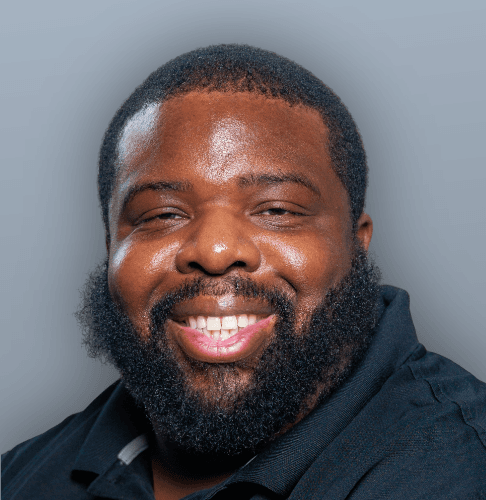
Anthony Graham
he/himLicensed Professional Clinical Counselor of Mental Health (LPCC)

 Dual Diagnosis, Depression, Anxiety, Mood Disorders, Substance Use, Anger Management

Self pay costs
Out-of-pocket session costs for clients who don’t have insurance or aren’t covered by their insurance for mental health services.
My truest self is ever entangled in this whirlwind of calamity. My name is Anthony L. Graham and I am a Licensed Professional Clinical Counselor (LPCC-s) in the state of Ohio and have been working as a therapist for the past 11 years. In my time as a clinician, I have worked in the dual diagnosis of mental/emotional disorders and substance use disorders for clients ranging from adolescence through late adulthood. Psychology has always been rooted in philosophy and the age-old question of “Who am I?” It has always been my goal to be the change that I want to see in the world by spreading positivity.
I support clients in identifying the change they believe they need. Change happens in stages and through supportive relationships: becoming aware of the need, preparing with a plan, and deciding to act. In my experience in alcohol/drug treatment, change typically requires help, whether from family/friends, a self-help group, or a “higher power.”
The following is a poem I wrote about being a counselor. My hope is that it informs your decision and inspires you to pursue a therapeutic relationship with me. Being a counselor is not about telling people what to do; it’s about helping people identify what is true. Being a counselor requires compassion and positive regard. —Anthony L. Graham, LPCC-s.

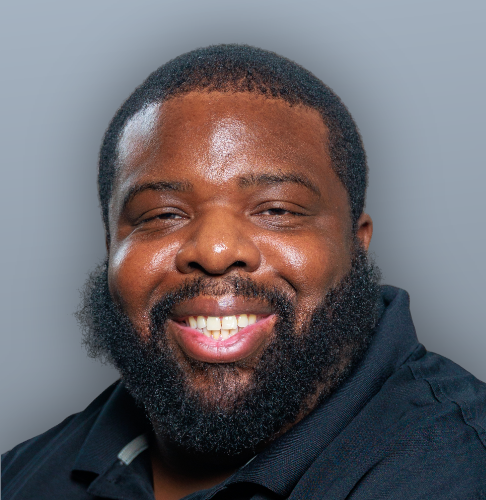
"I believe there is a difference between dwelling on the past and learning from it; therefore, its is important to learn from our past to inform our present and protect our future."
Why did you decide to become a counselor or psychiatric provider?
When I was in the latter half of my undergraduate studies, I had to deal with the deaths of two teammates. In the span of six months one of my teammates in track and field lost her life in a swimming accident and my other teammate on the football team was murdered in a night club in Dayton, OH a day before our third game of the season. At that point in time, I already had a desire to become a mental health professional; however, the deaths of my teammates during both of those respective seasons had a great deal to do with strengthening my resolve. My father is in recovery; therefore, working with individuals who struggle with substance abuse has always been a passion of mine.
What types of clients do you work best with?
I work best with the dually diagnosed population which refers to individuals who have both a mental health disorder and a substance use disorder from late adolescence through late adulthood.
What's one thing you wish all clients knew about therapy, mental health, or the healing process?
I encouraged having patience with one's self and with the process; given the time it more than likely took for the struggles in one's life to manifest, it takes a comparable amount of time to heal and make the changes that individual would like to make.
What can clients expect in their first session with you and in the early stages of therapy?
Professionally, I try not to look at the initial assessment completed for the client before the first session. During first session, I generally like to take the time to get to know the individual sitting in front of me without any bias. I like to go over the limits of confidentiality and develop a care plan/treatment plan so that we can collaborate on the goals that individual would like to achieve.
What personal experiences or values inform your practice as a therapist/provider?
I believe in supporting people in identifying what makes them happy. In my professional experience, helping people explore, provide insight, and achieve awareness into aspects of an individual person's self/life that provide a higher likelihood of making them happy is an underlying goal for many that enter therapy. Happiness is a subjective state of being dependent on an individual person's ability and willingness to experience pleasure and/or genuine enjoyment in life on a consistent basis. In therapy, there are many times an individual will engage in talk therapy and not know why they are there. Some engage in therapy because they were court-ordered by a judge; others may have been forced to get therapy by their loved ones. One thing is clear, despite the uncertainty or even ambivalence that may exist for some individuals that find their way to therapy, therapy is a need in some way shape or form. While the reason may be unclear, an individual can narrow their reason for being in therapy down to one possible fact for that person: they are not happy with their life and the way it is. I believe it is my duty to provide help and support during this journey.
How do you tailor therapy to meet each client’s unique needs?
I believe in meeting an individual client where they are and providing the best support possible in that moment. I believe in a multifaceted approach encompassing a wide range of theoretical orientations to best help the client make aspects of themselves and their lives objects of their awareness.
- Years in practice
- 12 years
- Graduating institute
- Cleveland State University
- Graduating degree
- Master of Education in Clinical Mental Health Counseling